
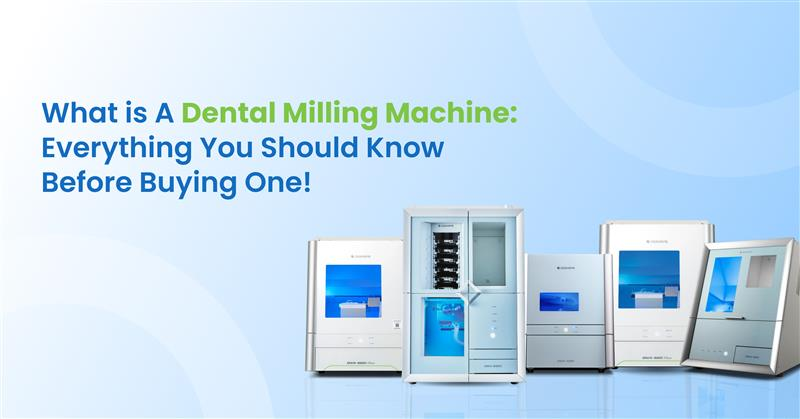
Crafting a dental restoration is a skill that requires high patience and precision. It is a tiring job that takes hours from a dental care professional in minute shaping, carving, and refining. Success is still not guaranteed. But the introduction of dental milling machines changed the game.
Today, technological advancements and powerful mechanization have replaced such manual processes with automated digital workflows. Dental milling machines are at the core of automating dental restoration crafting processes. They have become a vital part of digital dentistry practices.
In this blog, we will explain everything about these machines – what they are, what they do, how they benefit dental care professionals and patients, and how they work.
So, if you are planning to enhance patient experience at your dental lab or clinic, you may have a clearer idea about whether investing in a dental milling machine can help. Let’s scroll down and start-
What is a Dental Milling Machine?
A dental milling machine is a software-driven machine that crafts dental restorations like inlays/onlays, abutments, veneers, bridges, implant bars, and more.
Also known as CNC Milling Machines and CAD CAM Milling machines, in simple words, a dental milling machine builds dental restorations, setting the dental care professionals free from tiring manual jobs of shaping, drying, moulding, carving, refining, etc.
Why A Dental Milling Machine Matters?
The invention of dental milling machines has revolutionized the dental care industry in an efficient way.
By delivering an enhanced experience to patients and dentists, such machines have become an asset. Today, investing in a dental milling machine matters because it-
Improves Patient Experience
- Crafting dental restorations manually is often a troublesome process for the ailing patient.
- Sitting chairside for hours, proving impressions with messy moulds makes the patient journey tiring and uncomfortable.
- Introduction of milling machines has eliminated the messy moulds and reduced the long chairside hours.
Reduces Wait Time & Operational Cost for Dental Care Business
- These machines are known to deliver one dental restoration within hours and not in days, reducing the wait time dramatically for the dental care business and the patient as well.
- Additionally, with an in-house production unit, a clinic can further reduce the wait time by not depending on the labs.
- When third-party labs are no longer a middleman, and dental restorations are fast in delivery, a dental care business saves both time and operational costs.
Improves Quality & Higher Durability of Dental Restorations
- Driven by embedded CAD and CAM software solutions, such machines deliver a precise milling experience, amazing marginal fits, best occlusion, and aesthetic finish.
- With its temperature control system, it crafts a dental restoration with high accuracy, preventing unexpected heat breakage.
- Thus, through CAD CAM technology, a machine delivers restorations with high quality and great durability.
How Does the Dental Milling Machine Craft A Dental Restoration?
A dental milling machine has built-in cutting tools known as ‘burs’. The machine performs multi-directional (or multi-axis) movements such that the burs automatically cut, carve, shape, and refine the required dental restoration. Following sections provide a deeper understanding:
The Movements of the Machine
- Linear Movements (on the axes): The linear movements of a machine include left-right (x-axis), forward-backward (y-axis), up-down (z-axis), and vice-versa movements. These multi-directional movements in fixed linear paths deliver consistent cuts.
The Rotations
- Rotational Movements: The burs are attached by a spindle (a rotating motor) that tightly holds and rotates the burs. The rotational movements deliver fast and precise carving and shaping of the restoration.
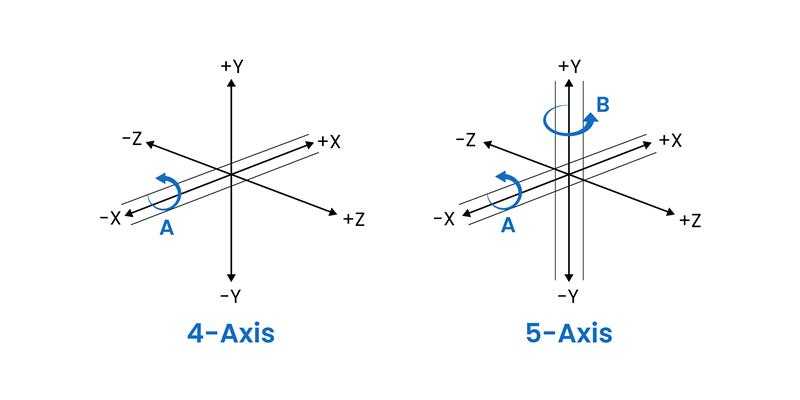
- Advanced Movements (Rotational Axes): Advanced 4-axis and 5-axis dental mills have additional axes. A 4-axis dental milling machine includes A-axis (in addition to X, Y, and Z), and a 5-axis dental milling machine includes X, Y, Z, A, and B axes.
- A-Axis: When the block of material used for making a dental restoration rotates like a CD.
- B-Axis: When a machine demonstrates an advanced function of tilting the material for higher precision.
Types of Dental Restorations A Dental Milling Machine Can Craft
A dental mill can build a wide range of dental restorations. The most anecdotal ones include-
✓ Inlays and Onlays
✓ Crowns
✓ Veneers
✓ Abutments
✓ Bridges
✓ Implant Bars
✓ Bite Splints
✓ Dentures
In simple terms, such machines can be a great helping hand for any dental care professional.
What Kinds of Materials Does a Dental Milling Machine Mill?
A good-quality machine can mill a wide variety of materials. Generally, the millable materials depend upon the machine type and its model. But in general, a dry dental milling machine is compatible for-
✓ Zirconia
✓ PEEK
✓ PEKK
✓ Wax
✓ PMMA
✓ Gypsum
✓ CoCr Sinter Metal
✓ Composite Resin
✓ Glass Fiber Reinforced Resin
✓ Polycarbonate
Whereas a good wet dental milling machine can mill-
✓ Glass ceramics
✓ Composite Resin
✓ Hybrid ceramics
✓ PMMA
✓ Sintered Zirconia
How Does A Dental Milling Machine Work: The Role of CAD/CAM and Step-By-Step Process
Technically, behind the aesthetically finished dental restorations, Computer Aided Design (CAD) and Computer Aided Manufacturing (CAM) software solutions work.
Simply put, the movements and rotations of a milling machine come from embedded CAD and CAM technology.
Operationally, a dental milling machine works in 5 steps to craft a dental restoration. These five steps are explained below-
Step #1 Digital Scan to Collect Patient’s Impression
Making dental restorations with a machine does not require silicone or alginate moulds. A dental care professional can use digital scanners connected to PC. These scanners take the dental impression within a few minutes, reducing the chairside time and eliminating the choking experience.
Step #2 Designing Restoration with CAD
Then, the dental care professional adds the digitally collected impression to the CAD software. Using the CAD, the technician or dentist may define the margins, occlusions, contacts, and all other relevant dimensions within a few seconds.
Step #3 Restoration Outlining with CAM
Now the role of the machine’s embedded software comes. The Computer Aided Manufacturing software (CAM) receives the design and measurements defined with the CAD and sends manufacturing instructions to the milling machine device.
Step #4 The Milling Process Begins
Then, the milling process begins, and the dental mill starts crafting the finished restoration from the block of material. The machine performs all its movements and crafts a finished restoration.
Step #5 The Final Touch Up
For the final touch-up, shine, and aesthetics, a dental restoration might require sintering, glazing, and polishing. A dental milling machine performs these tasks as well and delivers high-quality dental restorations with an even surface.
Understand Types of Dental Milling Machines Before Approaching A Supplier
Hopefully, our readers now have the best possible basic understanding of a dental milling machine. Now, let’s move towards the machine types – information that will help you pick the right machine model according to your requirements.
Generally, there are four types of dental milling machines in two different categories. One category comes from the axis and movement types. The second category comes from the milling environment type. These include-
Based on Axis Configuration or Movements
According to the machine movements or axis configuration, there are 2 types of milling machines-
- 4-Axis Dental Milling Machine
4-Axis dental milling machines move on 3 axes and perform one single type of rotation. The 4-Axis machine has 4 major types of movements-
- Left ↔ Right (X-Axis)
- Front ↔ Back (Y-Axis)
- Up ↔ Down (Z-Axis)
- Rotation of the Blank (A-Axis)
A 4-axis machine is best suited for shaping, outlining, and contouring. They are good for small dental clinics and labs that aim at delivering fast and durable dental restorations. 4-Axis machines are perfect for crafting crowns, inlays, onlays, veneers, and simple bridges.
- 5-Axis Dental Milling Machine
The 5-axis dental milling machines are one level up from the 4-axis ones. It performs all the movements that a 4-axis machine does, but they come with an additional movement type, which is tilting the material block for deep undercuts and high precision carving. B-Axis defines this additional advanced movement type.
A 5-axis machine is perfect for-
- Medium to Large-Scale Dental Clinics
- Dental Laboratories, And
- Cosmetic Dentistry Practices
They manufacture advanced restorations like-
- Full-Arch Restorations,
- Implant Abutments,
- Toronto Bridges, And
- Complex Bridge Geometries
Based on the Milling Environment
According to the milling environment, these machines have another 2 types-
- Dry Dental Milling Machine
The dry dental mills operate without any coolant material. Usually, dentists use them for carving hard materials and craft highly durable restorations out of them.
Dental care businesses building high-strength restorations should opt for dry dental milling machines.
- Wet Dental Milling Machine
As the name suggests, wet dental milling machines operate with liquid coolant to control the heat and friction during the milling process.
Ideally, when a dental care business usually deals in breakable material like-
- Glass ceramics and composite materials
- Lithium disilicate restorations
And focuses more on cosmetic smiles and aesthetic restorations with shiny surfaces and a smooth finish, then the wet dental mill is the best pick.
When the Movements and Environment Combine
Remember, a dental milling machine can be-
- 4-axis wet milling machine
- 5-axis wet milling machine
- 4-axis dry milling machine, or
- 5-axis dry milling machine
Based on the machine configuration and environment, these machines come in different models.
From entry-level to high performance and fully automated machine models, a wide range exists in the Indian market from renowned brands.
Say, for example, currently, the Roland dental milling machine by DGSHAPE is one of the leading dental milling machine suppliers in India.
As a dental care professional, you have the choice to pick the best dental milling machine as per your business type and requirements.
How Does A Dental Milling Machine Make Your Dental Care Business More Profitable?
Introducing a dental milling machine that suits your requirements, routine tasks, and business scale to your dental care business, unlock major benefits for you and your patients.
Broadly speaking, a milling machine is a great investment for clinics and labs to boost their revenues and net profits. Consider this-
- Faster Treatment Time >> Less Chair-Time >> More Patients Treated Per Day
When the turnaround time reduces from weeks to days, with negligible cases of remakes, you treat more patients per day with less wait time. Fast treatment, more patients, more revenues!
- More Precise Crowns/Veneers >> Fewer Adjustments Or Remakes >> Cost Saving
When the number of remakes goes down, you save a great deal of operational cost as you save yourself from material wastage. Additionally, you save your valuable time, which you can utilise in treating more patients.
- Better Comfort >> Higher Patient Satisfaction >> Better Reviews
As dental milling machines enhance the patient experience, you open gateways for amazing reviews and word-of-mouth marketing from them. Your great market image invites more patients from around the different corners.
Overall, investing in a good milling machine paves the way for a high ROI for a dental care business from multiple aspects.
Concluding Remarks
Dental milling machines are an innovative partner for dental care businesses that work like a skilled technician to craft high-precision, durable, and aesthetic dental restorations. They convert digital designs and measurements to finished restorations with high accuracy.
Buying a machine according to business needs, size, scale, and type can multiply the revenues of a dental care business. With the technologically fast-evolving world, an investment in a dental mill helps a dental care business stay ahead in competition by providing an enhanced patient care experience.