
Please introduce yourself
Please introduce yourself
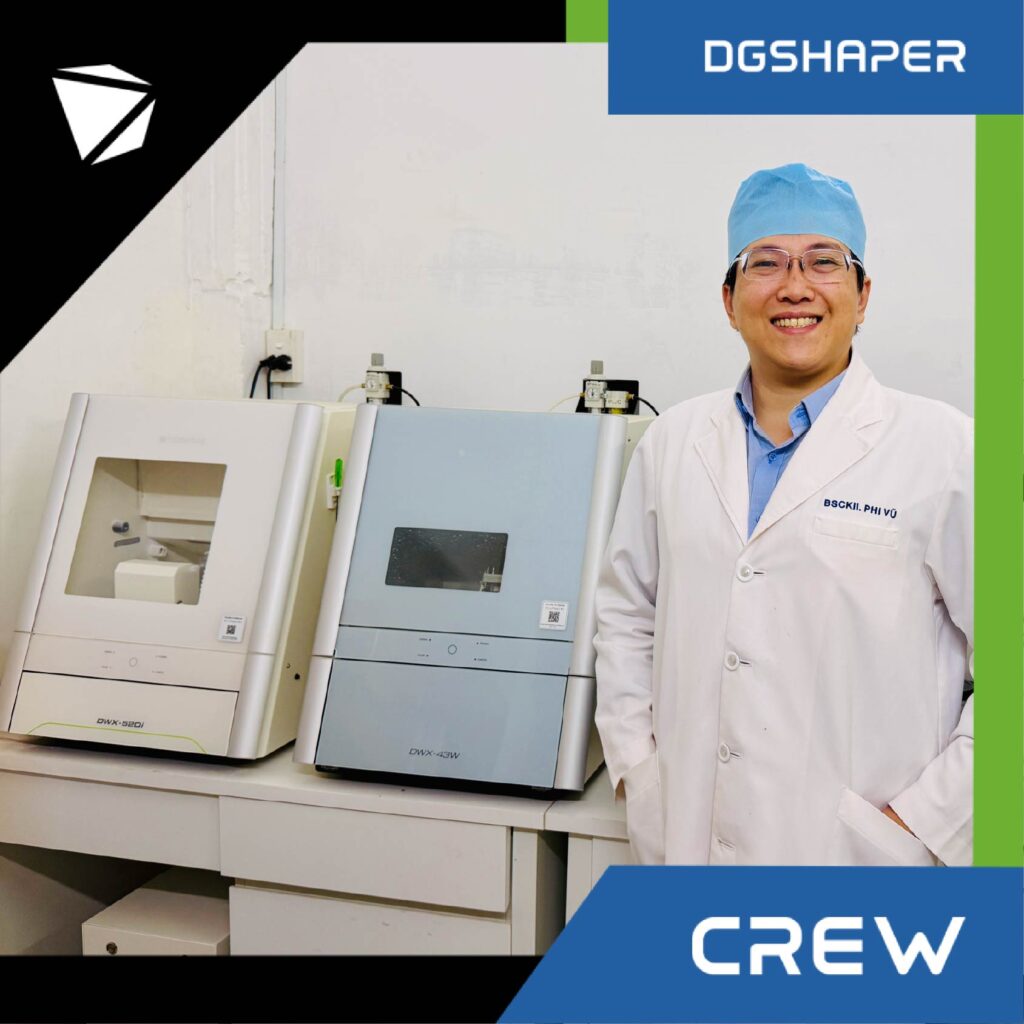
My name is Dr. Nguyen Pham Phi Vu, Specialist Level II in Oral & Maxillofacial Medicine and Healthcare Management, and Medical Director of Homy Dentistry in Ho Chi Minh City, Vietnam.
Homy Dentistry is a boutique, premium digital dental clinic with a strong focus on implantology, prosthetics, and full-mouth rehabilitation. Beyond clinical practice, I have developed a broader Digital Ecosystem that includes DforD TechLab, our in-house CAD/CAM production lab, and DforD Training, an education center serving both in-person participants and webinar audiences.
In parallel, I serve as a part-time lecturer at the University of Health Sciences, Vietnam National University Ho Chi Minh City.
At the core of everything we build is one guiding belief: digital technology should function as an integrated system rather than as a standalone tool. Its true value emerges when it connects clinical workflow, laboratory production, and professional education into one cohesive model.
My name is Dr. Nguyen Pham Phi Vu, Specialist Level II in Oral & Maxillofacial Medicine and Healthcare Management, and Medical Director of Homy Dentistry in Ho Chi Minh City, Vietnam.
Homy Dentistry is a boutique, premium digital dental clinic with a strong focus on implantology, prosthetics, and full-mouth rehabilitation. Beyond clinical practice, I have developed a broader Digital Ecosystem that includes DforD TechLab, our in-house CAD/CAM production lab, and DforD Training, an education center serving both in-person participants and webinar audiences.
In parallel, I serve as a part-time lecturer at the University of Health Sciences, Vietnam National University Ho Chi Minh City.
At the core of everything we build is one guiding belief: digital technology should function as an integrated system rather than as a standalone tool. Its true value emerges when it connects clinical workflow, laboratory production, and professional education into one cohesive model.
What made you choose DWX series?
What made you choose DWX series?
DforD TechLab currently operates two DGSHAPE milling units: the DWX-52Di for dry milling and the DWX-43W for wet milling.
The DWX-43W in our clinic holds a special significance. According to DGSHAPE, it was among the first units of this model introduced to Vietnam when we installed it.
Our decision to choose DGSHAPE was driven by three key considerations.
- First, its open architecture ensures seamless compatibility with Exocad DentalCAD, which is our primary design software.
- Second, its manufacturing reliability is essential in a clinical setting, where milling performance has a direct impact on patient care.
- Third, the quality of local and regional support has been exceptional.
DforD TechLab currently operates two DGSHAPE milling units: the DWX-52Di for dry milling and the DWX-43W for wet milling.
The DWX-43W in our clinic holds a special significance. According to DGSHAPE, it was among the first units of this model introduced to Vietnam when we installed it.
Our decision to choose DGSHAPE was driven by three key considerations.
- First, its open architecture ensures seamless compatibility with Exocad DentalCAD, which is our primary design software.
- Second, its manufacturing reliability is essential in a clinical setting, where milling performance has a direct impact on patient care.
- Third, the quality of local and regional support has been exceptional.
What challenges did you face before installing DWX, and how has the DWX helped overcome them?
What challenges did you face before installing DWX, and how has the DWX helped overcome them?
Before building the in-house lab, we depended on external laboratories, and it was a fundamental bottleneck of our clinical workflow.
Every prosthetic case, from a single crown to a full-arch rehabilitation, required 3 to 7 days of turnaround time. Beyond the scheduling challenge, it meant we had limited control over fit accuracy, material quality, and the ability to make real-time clinical adjustments. In complex implant cases, that gap between preparation and delivery often compromised both clinical outcomes and patient experience.
The DWX system fundamentally changed that dynamic.
With the DWX-43W integrated into our same-day workflow, we can complete the entire process—from scanning and CAD design to milling, finishing, and delivery—within one hour after tooth preparation. For full-arch implant cases, the DWX-52Di mills zirconia frameworks with the high level of accuracy required to achieve a passive fit.
Before building the in-house lab, we depended on external laboratories, and it was a fundamental bottleneck of our clinical workflow.
Every prosthetic case, from a single crown to a full-arch rehabilitation, required 3 to 7 days of turnaround time. Beyond the scheduling challenge, it meant we had limited control over fit accuracy, material quality, and the ability to make real-time clinical adjustments. In complex implant cases, that gap between preparation and delivery often compromised both clinical outcomes and patient experience.
The DWX system fundamentally changed that dynamic.
With the DWX-43W integrated into our same-day workflow, we can complete the entire process—from scanning and CAD design to milling, finishing, and delivery—within one hour after tooth preparation. For full-arch implant cases, the DWX-52Di mills zirconia frameworks with the high level of accuracy required to achieve a passive fit.
What has been your WOW moment with DGSHAPE?
What has been your WOW moment with DGSHAPE?
The defining moment came the first time we completed a lithium disilicate crown from final scan to cementation in under 60 minutes, while the patient remained in the chair throughout the process.
That was the moment when the concept of “same-day dentistry” stopped being a marketing phrase and became a measurable clinical reality for our team.
Another key realization was that the DWX-43W allows us to mill titanium custom abutments in-house. In the past, this level of capability was typically limited to large-scale dental manufacturing centers.
Having this capability in a two-chair boutique clinic in Vietnam is still remarkable to me. It has greatly expanded our ability to deliver highly personalized and precise solutions, especially for complex implant prosthetic cases that require customized emergence profiles.
The defining moment came the first time we completed a lithium disilicate crown from final scan to cementation in under 60 minutes, while the patient remained in the chair throughout the process.
That was the moment when the concept of “same-day dentistry” stopped being a marketing phrase and became a measurable clinical reality for our team.
Another key realization was that the DWX-43W allows us to mill titanium custom abutments in-house. In the past, this level of capability was typically limited to large-scale dental manufacturing centers.
Having this capability in a two-chair boutique clinic in Vietnam is still remarkable to me. It has greatly expanded our ability to deliver highly personalized and precise solutions, especially for complex implant prosthetic cases that require customized emergence profiles.
Do you have any additional comments or insights you would like to share with our global community?
Do you have any additional comments or insights you would like to share with our global community?
For any clinician considering in-house digital production, I would say that choosing the equipment is actually the easier part. The more difficult and more meaningful part is building the workflow, discipline, and team culture around it.
An in-house milling unit reaches its full potential when the clinical team, the design workflow, and the quality control process are all aligned. At Homy Dentistry, achieving that level of integration required time, intention, and continuous system-building. Once it came together, however, it elevated the standard of care we were able to deliver in a very meaningful way.
Through DforD Training, I have had the opportunity to share this approach with more than 1,000 dentists across Vietnam. One thing has become clear from these discussions: the biggest barrier to adopting digital dentistry is rarely the technology itself.
More often, the challenge lies in the lack of a reliable and integrated system that allows the technology to perform at its full potential.
I am grateful to DGSHAPE for being part of the infrastructure that makes such systems possible, and for caring enough to ask clinicians like me to share what we have learned.
For any clinician considering in-house digital production, I would say that choosing the equipment is actually the easier part. The more difficult and more meaningful part is building the workflow, discipline, and team culture around it.
An in-house milling unit reaches its full potential when the clinical team, the design workflow, and the quality control process are all aligned. At Homy Dentistry, achieving that level of integration required time, intention, and continuous system-building. Once it came together, however, it elevated the standard of care we were able to deliver in a very meaningful way.
Through DforD Training, I have had the opportunity to share this approach with more than 1,000 dentists across Vietnam. One thing has become clear from these discussions: the biggest barrier to adopting digital dentistry is rarely the technology itself.
More often, the challenge lies in the lack of a reliable and integrated system that allows the technology to perform at its full potential.
I am grateful to DGSHAPE for being part of the infrastructure that makes such systems possible, and for caring enough to ask clinicians like me to share what we have learned.